
Prostate cancer gene found
‧本文由 CK 分享 ‧
2007-01-09 ‧
顯示 3,701 次
‧
轉寄 5 次
‧
短評 4 篇
‧
Prostate cancer is the most common cancer affecting men in the UK, but the disease has baffled scientists, who know less about it than any of the other major cancers. Now, Liverpool University scientists working in partnership with the Institute of Cancer Research have made a vital discovery. This will enable doctors to predict how aggressive the cancer is likely to be – and tailor treatments accordingly.
|
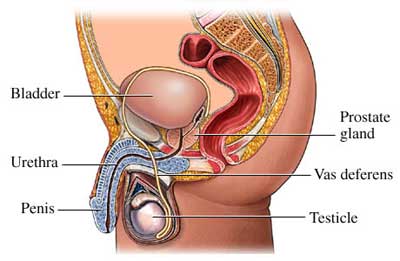
By the age of 65 many men will have some cancer cells in the prostate, but most will live out their natural span without the disease having any ill effects. Nonetheless, the disease kills 10,000 men a year in the UK. Prostate cancer can be treated – but the treatments carry a real risk of serious and permanent side effects, including incontinence and impotence. Since there has been no marker to distinguish harmless from aggressive cancer cells, many men prefer to cross their fingers and hope for the best; conversely, many thousands suffer invasive treatments which they may not require.
“A test to distinguish between aggressive tumours, the tigers, and those that are pussycats, has been the holy grail of prostate cancer research”, says Professor Colin Cooper of the Institute of Cancer Research, whose research team has been collaborating with a Liverpool team led by Professor Chris Foster. Together, they discovered that the E2F3 gene is a marker of how aggressive the prostate tumour will be.
“This should enable the development of a test to distinguish between aggressive and non-aggressive prostate cancer cells”, says Colin Cooper, “and we hope to achieve this within the next five years.
Professor Peter Rigby, Chief Executive at The Institute of Cancer Research, comments: “We now find ourselves in the unique and exciting position of being able to test new early markers of prostate cancer progression, which previously had not been possible. A rapid and immediate expansion of our research in this area is required so that our scientific advances can be translated into patient benefit without delay.” The new discovery may also provide scientists with an exciting new drug target.
This research is an excellent example of the main cancer research funders working together to tackle a major disease. It was co-funded by the Department of Health, Cancer Research UK and the Medical Research Council as part of a NCRI Prostate Cancer Collaborative.
0.00
0 votes
1
3
5
7
9
請按數字進行評分
請以1~9的評分代表由負面到正面的感受,統計數據將決定資訊的參考價值。謝謝!

|
關鍵字建檔說明
|
顯示/隱藏
列印
列印提示
- 您可以點擊右方的「顯示/隱藏」鏈結來隱藏不相關的內容。
- 內容確認後,點擊右方的「列印」鏈結或瀏覽器之列印鍵即可。
- 完成後,顯示被隱藏的內容即可繼續瀏覽。
 ─── 贊助網站營運基金之會員(一天一元)
 |
point
  於 2007-01-09 12:59:21 說 於 2007-01-09 12:59:21 說男人要看一下 |
|
Tony
於 2007-01-09 14:27:26 說 不僅了解健康,也可以學學英文,真是一箭雙鵰.........== |
|
戀戀微風
 於 2007-01-09 14:29:30 說 於 2007-01-09 14:29:30 說多了解健康 |
|
jun
於 2007-01-10 06:02:29 說 全文無法都懂..... |
